Houston is not what people who have never lived here think it is. It is not a flat, featureless oil town baking in the sun. It is the most ethnically diverse large city in the United States. It is home to the largest medical complex on Earth. It has one of the most sophisticated dining scenes in the country, with more James Beard Award semifinalists per capita than most cities twice its age. It has a thriving arts district, a growing bayou trail network, world-class museums, and a cost of living that makes coastal cities look absurd.
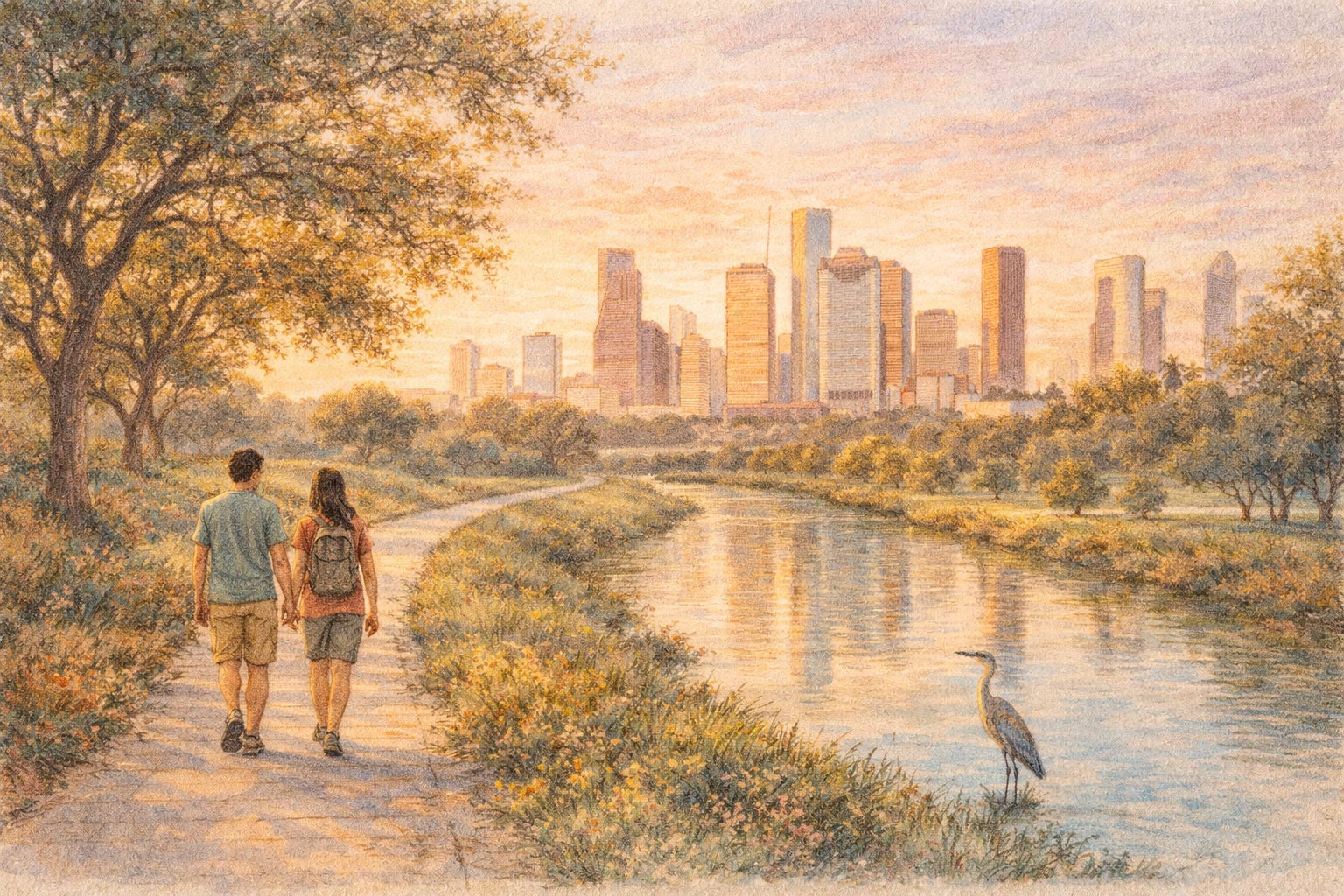
Houston is also enormous. The city limits cover over 670 square miles, and the greater metro area sprawls across nearly 10,000 square miles. There is no zoning in the City of Houston, a distinction unique among major American cities, which means the urban landscape is a sometimes chaotic, sometimes brilliant patchwork of residential, commercial, and industrial uses sitting side by side.
This guide is built for the people who live here. Not visitors. Not tourists. Residents. The people who need to know which hospital to go to, how METRO actually works, where to find affordable healthcare, which bayou trails connect to their neighborhood, how to prepare for hurricane season, and the thousand other practical details that make life in Houston work.
Bookmark this page. Share it with your neighbors. Come back whenever Houston throws you something new - which, given this city’s energy, will be often.
Part 1: Healthcare and Medical Services
Houston’s healthcare infrastructure is anchored by the Texas Medical Center, the largest medical complex in the world. But the city’s healthcare resources extend far beyond that single campus.
The Texas Medical Center (TMC)
The Texas Medical Center is not a single hospital. It is a campus of over 60 institutions spanning 50 million square feet, employing more than 120,000 people, educating 50,000 students, and receiving over 10 million patient visits annually. It is the eighth-largest business district in the United States.
Key institutions within the TMC include:
MD Anderson Cancer Center: Consistently ranked the number one cancer hospital in the country. MD Anderson is a destination for patients worldwide seeking cutting-edge oncology treatment and clinical trials.
Houston Methodist Hospital: A leading academic medical center known for cardiology, neurology, and organ transplantation.
Memorial Hermann - TMC: The primary teaching hospital for UTHealth Houston, with a Level I Trauma Center and comprehensive emergency services.
Texas Children’s Hospital: The largest children’s hospital in the United States, providing pediatric care across every specialty.
Baylor St. Luke’s Medical Center: Part of the CHI St. Luke’s Health system, known for cardiovascular care and the Texas Heart Institute.
Ben Taub Hospital: Harris Health System’s flagship hospital within the TMC, providing care regardless of ability to pay. Ben Taub is one of the busiest Level I Trauma Centers in the country.
Harris Health System
Harris Health System is the public healthcare safety net for Harris County, providing care to approximately 350,000 patients annually regardless of insurance status or ability to pay. The system includes:
Ben Taub Hospital (1504 Taub Loop, Medical Center): Emergency, inpatient, and outpatient services with a Level I Trauma Center.
Lyndon B. Johnson Hospital (5656 Kelley Street, Northeast Houston): Full-service acute care hospital serving northeast Harris County.
Over 20 community health centers throughout Harris County providing primary care, dental, behavioral health, and pharmacy services. Centers are located in neighborhoods across the city including Gulfton, Acres Home, Pasadena, Baytown, and many others.
Harris Health Gold Card: Harris Health’s financial assistance program provides free or reduced-cost care to Harris County residents who meet income requirements. Apply at any Harris Health facility or call 713-566-6509.
Community Health Centers
Legacy Community Health is the largest federally qualified health center (FQHC) in Texas, operating over 50 locations across the Houston area. Legacy provides primary care, dental, behavioral health, HIV/STI services, and pharmacy services on a sliding-scale fee basis regardless of insurance status.
Avenue 360 Health & Wellness provides primary care, behavioral health, and HIV services with a focus on underserved communities.
Hope Clinic serves the immigrant and refugee community in southwest Houston with primary care, dental, and social services in multiple languages.
Healthcare for the Homeless - Houston (HHH) provides medical, dental, and behavioral health services for people experiencing homelessness through clinic sites and mobile outreach.
Health Insurance
Medicaid in Texas has more restrictive eligibility than many states. Texas has not expanded Medicaid under the ACA, meaning that many low-income adults without children do not qualify. Adults with children may qualify at very low income levels.
CHIP (Children’s Health Insurance Program) covers children in families earning up to 200 percent of the federal poverty level.
The ACA Marketplace (healthcare.gov) provides subsidized plans for individuals and families who do not qualify for Medicaid or employer-sponsored insurance. Open enrollment runs November through January annually.
For uninsured residents, Harris Health’s Gold Card and community health centers provide the most accessible care options.
Mental Health Resources
The Harris Center for Mental Health and IDD is the largest community mental health center in Texas, providing services to over 90,000 individuals annually. Services include outpatient counseling, psychiatric care, crisis intervention, substance use treatment, and services for people with intellectual and developmental disabilities.
Crisis Hotline: 713-970-7000 (24/7)
988 Suicide and Crisis Lifeline: Call or text 988.
The Menninger Clinic (within the TMC) is one of the nation’s premier psychiatric hospitals, providing inpatient and outpatient treatment for complex psychiatric conditions.
NAMI Greater Houston provides support groups, education, and advocacy for families and individuals affected by mental illness.
Urgent Care
Major urgent care chains in Houston include NextLevel Urgent Care, CareNow, Texas MedClinic, and MD Now, with locations throughout the city and suburbs. Most accept insurance; cash-pay rates typically range from $100 to $250 per visit.
For lower-cost options, Harris Health community health centers and Legacy Community Health locations offer walk-in and same-day appointments at sliding-scale fees.
Part 2: Transportation
Houston is a car city. There is no getting around that fact. But the transit system is improving, the bayou trail network is expanding, and understanding your transportation options can save time, money, and sanity.
Driving and Freeways
Houston’s freeway system is one of the most extensive in the country. The key arteries every Houstonian must know:
Interstate 610 (The Loop): The inner ring road that defines “Inside the Loop” versus outside it. Everything within 610 is generally considered central Houston.
Beltway 8 (Sam Houston Tollway): The outer ring road, encircling the city approximately 25 miles from Downtown. This is a toll road for most of its length.
Interstate 45 (Gulf Freeway / North Freeway): Runs north-south through the center of the city, connecting Downtown to Galveston to the south and The Woodlands/Conroe to the north.
Interstate 10 (Katy Freeway / East Freeway): Runs east-west, connecting Katy and the Energy Corridor to the west with Downtown and the ship channel to the east. The Katy Freeway section is the widest freeway in the world at 26 lanes.
US-59/I-69 (Southwest Freeway / Eastex Freeway): Runs southwest-northeast through the city, passing through the Galleria area and connecting to Sugar Land and the southwest suburbs.
US-290 (Northwest Freeway): Connects Downtown to the northwest suburbs including Cypress and the Highway 290 corridor.
SH-288 (South Freeway): Connects Downtown to Pearland and Brazoria County to the south.
HOV/HOT Lanes: Houston operates an extensive system of barrier-separated High-Occupancy Vehicle lanes on major freeways (I-45, I-69, US-290, I-10). These lanes reverse direction for morning and evening commutes. Solo drivers can use them as HOT (High-Occupancy Toll) lanes by paying a variable toll.
Rush hour in Houston runs from approximately 6:30 to 9:30 AM and 4:00 to 7:00 PM. The Katy Freeway (I-10 West), the Southwest Freeway (US-59/I-69), and I-45 North are consistently the most congested corridors.
METRO
The Metropolitan Transit Authority of Harris County (METRO) operates bus, light rail, Park & Ride, paratransit, and HOV/HOT lane services. In 2025, the system carried approximately 78 million rides.
METRORail consists of three light rail lines covering 22.7 miles:
Red Line (North): 13 miles from Fannin South through Midtown, Downtown, the Museum District, Hermann Park/Houston Zoo, the Texas Medical Center, and NRG Park to the Northline Transit Center/Houston Community College.
Green Line (East End): 3.3 miles from Downtown east through EaDo and the historic East End to Magnolia Park Transit Center.
Purple Line (Southeast): 6.6 miles from Downtown southeast through the Third Ward, the University of Houston, and Texas Southern University to Palm Center.
Fares: Local bus and METRORail fare is $1.25. Park & Ride express bus fare is $3.25 one-way. METRO uses the RideMETRO Fare Card (contactless) or the RideMETRO app for payment. The loyalty program provides one free ride for every ten paid rides. Day passes are available for $3.00 (local) and $6.50 (Park & Ride).
METRO Bus: Over 80 local routes provide service across the city. Color-coded routes indicate frequency: Red routes run every 15 minutes or less during most hours. Blue routes run every 15-30 minutes. Green routes run every 30-60 minutes.
Park & Ride: Express bus service connects suburban communities to Downtown, the Galleria, the Medical Center, and Greenway Plaza via 28 Park & Ride lots. Buses feature reclining seats, Wi-Fi, and dedicated freeway lanes.
METRO curb2curb: On-demand rideshare service in specific zones for areas not well-served by fixed routes.
METROLift: Shared-ride paratransit service for individuals with disabilities who cannot use fixed-route service.
METRORapid Silver Line: Bus rapid transit along the Post Oak corridor in the Galleria/Uptown area, using a dedicated busway.
Airports
George Bush Intercontinental Airport (IAH): Houston’s primary airport for international and domestic flights, located in north Houston. Major hub for United Airlines. Connected to the city by US-59, I-45, and the Hardy Toll Road. No rail connection currently exists.
William P. Hobby Airport (HOU): Located in southeast Houston, Hobby is a major hub for Southwest Airlines and serves primarily domestic routes. Closer to Downtown than IAH and generally preferred by locals for domestic travel.
Ride-Hailing and Taxis
Uber and Lyft operate extensively throughout Houston. Yellow Cab Houston and other taxi services are available but far less common than app-based rides. Houston’s sprawl means ride costs can be significant; a ride from IAH to Downtown runs approximately $35-50.
Cycling
Houston’s cycling infrastructure is improving but remains limited compared to denser cities. The bayou trail network provides the best cycling infrastructure in the city (see Parks section). BCycle is Houston’s bike-share system, with stations in Midtown, Downtown, the Museum District, EaDo, the Heights, and other inner-city neighborhoods.
Part 3: Parks, Recreation, and the Bayou Trail Network
Houston’s park system is anchored by one of the most ambitious urban trail projects in the country: the bayou greenway network. Combined with major urban parks and nature preserves, the city offers far more outdoor recreation than its flat, humid reputation suggests.
The Bayou Greenway System
The Bayou Greenways 2020 initiative (now continuing beyond 2020) is connecting 150 miles of linear parks and trails along Houston’s major bayous. When complete, the network will link neighborhoods across the city with continuous, car-free paths for walking, running, and cycling.
Buffalo Bayou Park (160 acres) is the crown jewel of the system, stretching from Shepherd Drive to Downtown along the banks of Buffalo Bayou. The park features landscaped trails, public art installations, a dog park, the Barbara Fish Daniel Nature Play Area, kayak and bike rentals, the Cistern (an underground art space in a former drinking water reservoir), and the Johnny Steele Dog Park. The park hosts frequent events including concerts, fitness classes, and community gatherings.
White Oak Bayou Greenway runs through the Heights, Garden Oaks, and Oak Forest neighborhoods, providing a paved trail connecting residential areas to the MKT (Markets at Heights) trail and beyond.
Brays Bayou Greenway runs through the Medical Center area, connecting Hermann Park to neighborhoods in southwest Houston. The trail passes the TMC, Rice University, and MacGregor Park.
Sims Bayou Greenway serves South Houston and southeast neighborhoods.
Hunting Bayou Greenway serves the East End and Denver Harbor communities.
Greens Bayou Greenway serves north and northeast Houston.
Clear Creek Greenway serves the Clear Lake and Bay Area communities.
Each bayou greenway provides paved trails (typically 10-12 feet wide), native landscaping, exercise stations, shade structures, and connections to surrounding neighborhoods. The system is designed to be functional transportation infrastructure as well as recreational space.
Major Parks
Hermann Park (445 acres) in the Museum District is one of the most visited parks in the nation. It contains the Houston Zoo, the Miller Outdoor Theatre (free performances), the Hermann Park Railroad, the Japanese Garden, McGovern Centennial Gardens, pedal boats on McGovern Lake, and miles of walking paths. The park is connected to Rice University and the TMC via the Brays Bayou trail.
Memorial Park (1,500 acres) is one of the largest urban parks in the country, located inside the Loop along Memorial Drive. It contains a golf course, tennis center, swimming pool, running trails, mountain bike trails, sports fields, the Eastern Glades (a restored wetland area), and the Memorial Park Land Bridge (a landscape bridge reconnecting two halves of the park that were divided by Memorial Drive). The park’s trail system offers both paved paths and unpaved natural-surface trails through pine and hardwood forest.
Discovery Green (12 acres) in Downtown is a beautifully designed urban park with a performance stage, playground, dog runs, a lake, and a calendar packed with free events including concerts, film screenings, yoga classes, and seasonal programming.
Terry Hershey Park along Buffalo Bayou in the Energy Corridor/west Houston provides over 12 miles of paved and unpaved trails through a linear park system popular with runners, cyclists, and dog walkers.
George Bush Park (7,800 acres) in west Houston provides vast open space, shooting ranges, model airplane fields, and access to the Barker Reservoir detention area.
Sheldon Lake State Park in northeast Houston provides freshwater fishing, nature trails, an environmental learning center, and surprising solitude within the city limits.
Galveston Island State Park (approximately one hour south) provides beach access, bay-side kayaking, camping, and birding in a barrier island ecosystem.
Nature and Birding
Houston sits along the Central Flyway, one of the major bird migration routes in North America. The region is one of the premier birding destinations in the country.
High Island (approximately 90 minutes east) is legendary among birders for spring migration fallout events where thousands of neotropical migrants descend on the small coastal oak groves.
Anahuac National Wildlife Refuge (approximately 90 minutes east) provides exceptional shorebird, waterfowl, and alligator viewing.
Brazos Bend State Park (approximately one hour southwest) offers hiking, fishing, camping, and the George Observatory, plus reliable sightings of wild American alligators.
Jesse H. Jones Park in Humble provides cypress swamp boardwalks and nature trails within the metro area.
Part 4: Libraries
Houston Public Library (HPL)
The Houston Public Library operates 36 locations across the city, anchored by the Central Library at 500 McKinney Street in Downtown. HPL provides free library cards to all Houston residents and Harris County residents.
Services include access to millions of books, e-books, audiobooks, and digital media. Free WiFi and computer access at all branches. Meeting rooms and study spaces. Digital resources including LinkedIn Learning, Kanopy streaming, and Libby for e-books. Free museum and attraction passes through the Museum Experience Pass program. Citizenship preparation classes. ESL and literacy classes. Children’s and teen programming year-round. Tax preparation assistance (seasonal). Notary services (at select branches). 3D printing and maker space access (at select branches).
Harris County Public Library (HCPL)
Harris County Public Library operates 26 branch libraries serving unincorporated Harris County and some smaller cities within the county. HCPL provides complementary services to HPL, and cards from one system can sometimes be used at the other.
Other Area Libraries
Incorporated cities within the metro area often operate their own library systems, including Fort Bend County Libraries, Pasadena Public Library, Sugar Land Branch Library, and others.
Part 5: Education
K-12 Public Schools
Houston Independent School District (HISD) is the largest school district in Texas and the eighth-largest in the United States, serving approximately 187,000 students across 276 schools. HISD has faced significant governance challenges in recent years, including state intervention and the appointment of a superintendent by the Texas Education Agency.
HISD operates magnet programs that allow students to apply to specialized schools outside their zoned attendance area. Popular magnet programs include DeBakey High School for Health Professions, the High School for the Performing and Visual Arts (HSPVA), Carnegie Vanguard High School, and Lamar High School’s IB program.
Beyond HISD, the Houston area is served by numerous other school districts, many of which are highly rated:
Katy ISD (west Houston/Katy): Consistently rated among the top large school districts in Texas.
Fort Bend ISD (southwest Houston/Sugar Land): Known for academic excellence and diversity.
Cy-Fair ISD (northwest Houston/Cypress): One of the largest districts in Texas.
Spring Branch ISD (west Houston/Spring Branch/Memorial): Known for strong academic programs inside the Loop and in the Memorial area.
Clear Creek ISD (southeast Houston/Clear Lake/League City): Serves the NASA/Johnson Space Center area with strong STEM programs.
Humble ISD, Klein ISD, Spring ISD, Alief ISD, Aldine ISD, Pasadena ISD, and others serve various portions of the metro area.
Higher Education
Rice University is one of the most prestigious private universities in the country, located in the Museum District adjacent to Hermann Park. Known for engineering, sciences, and business.
University of Houston (UH) is a major public research university in the Third Ward, with strong programs in engineering, business, law, and optometry.
Texas Southern University (TSU) is one of the largest historically Black universities in the nation, located in the Third Ward near UH.
University of Houston-Downtown (UHD) provides affordable four-year education in a downtown campus setting.
Houston Community College (HCC) operates multiple campuses across the city, providing affordable two-year education, workforce training, and transfer pathways to four-year universities.
Lone Star College serves the north Houston suburbs with multiple campuses and a wide range of programs.
South Texas College of Law Houston, Texas A&M School of Law (Houston campus), and the University of Houston Law Center provide legal education.
Baylor College of Medicine, UTHealth Houston, and the other medical schools within the TMC make Houston one of the largest medical education centers in the world.
Part 6: Housing
No Zoning - What It Means
Houston is the only major American city without a comprehensive zoning ordinance. This means that land use is governed primarily by deed restrictions (private agreements between property owners), the city’s development code (which controls setbacks, parking, lot size, and other technical standards), and market forces.
The practical implications for residents: a high-rise condo can be built next to a single-family home. A bar can open near a church. A townhouse development can replace a single-family lot. This lack of zoning contributes to Houston’s relative housing affordability compared to cities with more restrictive land-use regulations, but it also means the character of a neighborhood can change rapidly.
Tenant Protections
Texas has fewer tenant protections than states like California or New York. There is no statewide or local rent control in Texas. Landlords are not required to provide a specific reason for non-renewal of a lease (unless the lease states otherwise). However, landlords must comply with the Texas Property Code regarding security deposits, repairs, and habitability.
Key tenant rights in Texas: Landlords must make diligent efforts to repair conditions that affect health and safety after receiving written notice from the tenant. Security deposits must be returned within 30 days of move-out (less any legitimate deductions). Landlords cannot lock tenants out or remove their belongings without a court order.
Lone Star Legal Aid provides free legal help for low-income tenants facing housing issues. Call 800-733-8394.
Houston Volunteer Lawyers provides free legal clinics on landlord-tenant issues.
Finding Housing
Houston’s housing market is significantly more affordable than coastal cities. Average one-bedroom rents range from approximately $900 in outer neighborhoods to $1,800 or more in premium inner-loop areas. Median home prices are well below the national median in many parts of the city.
HAR.com (Houston Association of Realtors) is the dominant real estate search platform for the Houston area. Apartments.com, Zillow, and Craigslist are also widely used.
Houston Housing Authority operates public housing and administers Section 8 vouchers for qualifying low-income residents. Waitlists can be long.
The City of Houston Housing and Community Development Department administers homebuyer assistance programs, including down payment assistance for qualifying first-time buyers.
Part 7: Region-by-Region Neighborhood Guide
Downtown Houston
Downtown has undergone significant development in recent years, with new residential towers, hotels, restaurants, and entertainment venues transforming what was once a 9-to-5 business district.
Key landmarks include Discovery Green (the central urban park), Daikin Park (home of the Houston Astros), the Theater District (17 blocks housing the Houston Ballet, Houston Grand Opera, Alley Theatre, and Houston Symphony), the George R. Brown Convention Center, and a growing collection of restaurants and bars.
The METRORail Red, Green, and Purple lines all serve Downtown, making it the best-connected neighborhood for transit.
Midtown
Immediately south of Downtown, Midtown is a walkable, transit-served neighborhood centered on the Red Line corridor along Main Street. The area features a dense concentration of bars, restaurants, and nightlife establishments. Midtown Park provides green space in the heart of the neighborhood. The area attracts young professionals and is one of the most transit-friendly neighborhoods in the city.
The Museum District / Hermann Park / Rice Village
This cluster of neighborhoods south of Midtown contains Houston’s highest concentration of cultural institutions. The Museum of Fine Arts, Houston (MFAH), Houston Museum of Natural Science, Contemporary Arts Museum Houston, Children’s Museum Houston, Holocaust Museum Houston, and the Menil Collection (technically in Montrose but close) are all within walking distance.
Hermann Park anchors the area with the zoo, Miller Outdoor Theatre, and Japanese Garden. Rice University’s tree-shaded campus is a beloved walking and running destination. Rice Village provides an upscale shopping and dining district adjacent to campus.
The Red Line serves this entire area, making it one of the few neighborhoods in Houston where car-free living is genuinely viable.
Montrose
Montrose is Houston’s most eclectic neighborhood, historically the center of the city’s LGBTQ+ community and arts scene. The area features a dense mix of restaurants, bars, galleries, vintage shops, and independent businesses along Westheimer Road and Montrose Boulevard.
The Menil Collection (free admission) and the Rothko Chapel are located here, along with numerous smaller galleries and creative spaces. The neighborhood’s tree-lined residential streets feature a mix of bungalows, townhomes, and apartment buildings.
The Heights
The Heights (officially Houston Heights) is one of Houston’s most desirable neighborhoods, featuring historic Victorian and Craftsman homes, a walkable commercial district along 19th Street and Heights Boulevard, and strong community identity.
Heights Boulevard itself is a wide, tree-lined street with a central esplanade used for walking and jogging. The White Oak Bayou Greenway runs through the neighborhood, providing trail connections to Downtown and neighborhoods to the northwest.
The Heights Hike and Bike Trail, local parks, farmers market (Saturday mornings), and charming restaurant scene make this one of the most livable urban neighborhoods in the city.
EaDo (East Downtown)
EaDo is a former industrial area transformed into a vibrant entertainment and dining district. Shell Energy Stadium (home of the Houston Dynamo and Houston Dash), the 8th Wonder Brewery complex, and a growing collection of restaurants and bars anchor the area. The Green Line serves EaDo, connecting it to Downtown.
The Historic East End / Second Ward
The East End is Houston’s historic Mexican-American neighborhood, centered on the Navigation Esplanade and Harrisburg Boulevard. The area features taquerias, panaderias, mariachi bands, and cultural institutions that reflect generations of Latino heritage.
Navigation Esplanade is a beautifully landscaped boulevard with a wide pedestrian median used for walking and community gathering. The Green Line serves the East End.
Third Ward
The Third Ward is one of Houston’s historic African American neighborhoods, home to Texas Southern University, the University of Houston, and Emancipation Park (one of the oldest public parks in Texas, purchased by formerly enslaved people in 1872).
The Third Ward is experiencing significant change, with new development alongside longstanding community institutions. The Purple Line serves the area, connecting it to Downtown and UH.
River Oaks
River Oaks is Houston’s most affluent neighborhood, featuring stately mansions, the River Oaks Country Club, and tree-lined streets that feel like a different world from the surrounding city. River Oaks Shopping Center is one of the city’s most charming retail centers.
Galleria / Uptown
The Galleria/Uptown area is Houston’s second major business district, anchored by The Galleria, the largest mall in Texas and one of the largest in the country with over 400 stores. The surrounding area features high-rise office towers, luxury hotels, and high-rise residential buildings.
The METRORapid Silver Line BRT serves the Post Oak corridor through this area.
Memorial / Energy Corridor
The Memorial neighborhoods (Memorial Villages, including Piney Point Village, Bunker Hill Village, Hunters Creek Village, and others) are affluent residential communities west of the Loop. Memorial Park’s 1,500 acres provide extensive recreation.
The Energy Corridor further west along I-10 is a major business district anchored by energy companies including BP, ConocoPhillips, and others. Terry Hershey Park provides 12+ miles of trails along Buffalo Bayou.
The San Fernando Valley... er, The San Houston
Just kidding. But Houston does have its own version of sprawl. The neighborhoods outside the Loop and Beltway extend in every direction:
Katy / West Houston: Master-planned communities, excellent schools (Katy ISD), family-friendly suburbs, and growing commercial development along I-10 West.
Sugar Land / Fort Bend County: Affluent, diverse communities southwest of Houston with top-rated schools (Fort Bend ISD) and a charming town center.
The Woodlands: A master-planned community 30 miles north of Downtown with outstanding parks, trails, Town Center shopping and dining, and The Cynthia Woods Mitchell Pavilion (a major concert venue).
Clear Lake / Bay Area: Home to NASA’s Johnson Space Center and Space Center Houston. Waterfront communities along Clear Lake and Galveston Bay. Excellent schools (Clear Creek ISD).
Pearland / Friendswood: Growing southern suburbs with family-friendly communities and improving commercial amenities.
Cypress / Tomball: Northwest suburbs with master-planned communities, good schools (Cy-Fair ISD), and rapid growth.
Spring / Klein: North Houston suburbs with established neighborhoods and growing commercial development. Klein ISD is well-regarded.
Humble / Kingwood / Atascocita: Northeast suburbs with strong community identity, nature access (Jesse H. Jones Park), and Humble ISD schools.
Pasadena / Deer Park / La Porte: Southeast communities near the ship channel with a working-class character and proximity to the San Jacinto Battleground State Historic Site.
Part 8: Dining
Houston’s food scene is one of the best and most diverse in the United States. The city’s lack of a dominant single cuisine and its massive immigrant population create a dining landscape that rivals any city in the country.
Tex-Mex and Mexican
Houston’s Tex-Mex tradition runs deep. El Tiempo Cantina and Ninfa’s on Navigation (the original home of fajitas) represent the upscale end. Hundreds of taquerias, taco trucks, and neighborhood restaurants serve everything from breakfast tacos to barbacoa to mole to birria throughout the city. The best concentration of authentic Mexican food is along the Navigation Boulevard corridor in the East End and along Long Point Road in Spring Branch.
Barbecue
Houston’s barbecue scene has exploded. Truth BBQ (Montrose/Heights area) has been called the best barbecue in Texas by several publications. Killen’s Barbecue (Pearland), Pinkerton’s Barbecue (Heights), Feges BBQ (Greenway Plaza), and Blood Bros. BBQ (Bellaire Boulevard) represent the new wave of Houston barbecue that blends Texas tradition with multicultural influences.
Vietnamese
Houston has the second-largest Vietnamese population in the United States (after the San Jose area). Midtown and the Bellaire Boulevard/Chinatown corridor in southwest Houston offer exceptional pho, banh mi, com tam, and other Vietnamese specialties. Crawfish and Noodles combines Vietnamese and Cajun influences. The concentration of Vietnamese restaurants along Bellaire Boulevard from Beltway 8 to Highway 6 is one of the great food strips in the country.
Chinese
Houston’s Chinatown along Bellaire Boulevard in the Sharpstown/Alief area is one of the largest and most vibrant in the southern United States. Dim sum, Sichuan hot pot, hand-pulled noodles, Cantonese seafood, and regional Chinese cuisines from nearly every province are available within a few-mile stretch.
Indian and Pakistani
The Hillcroft Avenue corridor in southwest Houston (often called the Mahatma Gandhi District) features dozens of Indian, Pakistani, and South Asian restaurants, grocery stores, and cultural institutions. The area serves one of the largest South Asian communities in the southern United States.
Nigerian and West African
Houston has the largest Nigerian population of any U.S. city. Restaurants serving jollof rice, suya, egusi soup, and other Nigerian and West African specialties are concentrated in southwest Houston, Alief, and the Bissonnet corridor.
Korean, Japanese, and Other Asian
Excellent Korean food is available along Long Point Road in Spring Branch (sharing space with the area’s Mexican and Central American restaurants). Japanese ramen and sushi restaurants are scattered throughout the inner city. Houston’s Filipino, Ethiopian, Salvadoran, Honduran, and Guatemalan food scenes are all growing.
Southern and Soul Food
From fried catfish to smothered pork chops to peach cobbler, Houston’s Southern food tradition is alive and well. Turkey Leg Hut (Third Ward) became a social media sensation. Killen’s STQ (Pearland) blends barbecue with Southern comfort food. Neighborhood soul food restaurants in Third Ward, Acres Home, and Sunnyside serve traditions that go back generations.
Gulf Coast Seafood
Proximity to the Gulf of Mexico provides Houston with outstanding fresh seafood. Shrimp, oysters, crab, and Gulf fish are available at restaurants ranging from casual shacks to upscale dining rooms. The Original Ninfa’s serves Gulf-inspired Mexican seafood. Underbelly Hospitality’s restaurants showcase Gulf Coast ingredients. Goode Company Seafood is a longtime Houston institution.
James Beard Award Recognition
Houston consistently produces James Beard Award semifinalists and winners. In recent years, chefs and restaurants representing Vietnamese, Indian, Korean, Mexican, barbecue, and contemporary American cuisines have received national recognition, cementing Houston’s reputation as one of the most important food cities in America.
Part 9: Financial Services and Benefits
SNAP/Food Stamps
Apply for SNAP (Supplemental Nutrition Assistance Program) benefits through the Texas Health and Human Services Commission at yourtexasbenefits.com or at local offices. Benefits are loaded onto a Lone Star Card (EBT).
Double Up Food Bucks programs at participating farmers markets match SNAP dollars spent on produce, effectively doubling purchasing power.
TANF and Other Assistance
TANF (Temporary Assistance for Needy Families) provides cash assistance to qualifying families. Apply through yourtexasbenefits.com.
WIC (Women, Infants, and Children) provides nutrition assistance and education for pregnant women, new mothers, and young children. Apply at local WIC clinics.
Utility Assistance
LIHEAP (Low Income Home Energy Assistance Program) helps qualifying households pay energy bills. Apply through community action agencies.
CenterPoint Energy (Houston’s electric delivery company) and various retail electric providers serve the Houston market. Texas has a deregulated electricity market, meaning consumers choose their retail electric provider. Shop for rates at powertochoose.org.
211 Texas / United Way
Dial 211 or visit 211texas.org for information about social services including food assistance, housing, healthcare, childcare, and crisis intervention. Available 24/7 in multiple languages.
Part 10: Community Resources and Government Services
311 Houston
Houston 311 handles non-emergency city service requests including potholes, street light outages, water main breaks, heavy trash pickup, and code enforcement complaints. Call 311, visit houston311.org, or use the Houston 311 app.
Super Neighborhoods
Houston recognizes 88 Super Neighborhoods, each with a council that provides community input on local issues. Super Neighborhood councils hold regular public meetings and serve as a voice for residents in city planning and service delivery decisions. Find your Super Neighborhood at houstontx.gov/superneighborhoods.
City Council
Houston’s City Council consists of the Mayor and 16 Council Members (11 district representatives and 5 at-large members). Council Members provide constituent services and represent neighborhood interests in city governance.
Harris County Services
Harris County government provides services including the county hospital system (Harris Health), the flood control district, county parks, the toll road authority, and the justice system. Harris County Precinct offices provide road maintenance, parks, and community services for residents outside the City of Houston.
Legal Services
Lone Star Legal Aid provides free civil legal services to low-income residents across the Houston area. Call 800-733-8394.
Houston Volunteer Lawyers provides free legal clinics and pro bono representation for qualifying residents.
AVANCE Houston provides family support services, financial literacy, and legal referrals for low-income families.
Immigrant Services
BakerRipley (formerly Neighborhood Centers Inc.) is one of the largest social service organizations in Texas, providing immigration legal services, workforce development, education, and community programs across Houston.
Catholic Charities of the Archdiocese of Galveston-Houston provides immigration legal services, refugee resettlement, and social services.
YMCA International Services provides refugee resettlement, immigration legal services, and cultural integration programs.
Part 11: Cultural Institutions
Museums
Houston’s Museum District contains 19 museums within a 1.5-mile radius, many of which offer free admission.
Museum of Fine Arts, Houston (MFAH): One of the largest art museums in the country. Free general admission on Thursdays.
The Menil Collection: World-class art collection housed in a Renzo Piano-designed building. Always free.
Contemporary Arts Museum Houston (CAMH): Always free.
Houston Museum of Natural Science: Major natural history museum with a planetarium, butterfly center, and permanent and rotating exhibits.
Children’s Museum Houston: One of the top-rated children’s museums in the country.
Holocaust Museum Houston: One of the largest Holocaust museums in the country. Free.
Buffalo Soldiers National Museum: Preserves the legacy of African American military service. Free.
The Health Museum: Interactive exhibits focused on health and the human body.
Asia Society Texas Center: Art, culture, and programming focused on Asia and Asian Americans.
Houston Center for Photography: Always free.
The Rothko Chapel: A non-denominational chapel housing 14 Mark Rothko paintings. An internationally recognized space for meditation and human rights dialogue. Always free.
Performing Arts
Houston’s Theater District is the second-largest in the United States (after New York City’s), concentrated in a 17-block area of Downtown.
Houston Grand Opera: One of the premier opera companies in the country, performing at the Wortham Theater Center.
Houston Ballet: One of the largest professional ballet companies in the US.
Houston Symphony: Performing at Jones Hall since 1966.
Alley Theatre: One of the oldest professional resident theaters in the country.
Hobby Center for the Performing Arts: Hosts touring Broadway shows and other performances.
Miller Outdoor Theatre in Hermann Park provides free performances (theater, dance, music, film) year-round. One of the few free professional outdoor theaters in the country.
Part 12: Weather and Disaster Preparedness
Houston’s weather defines daily life in ways that residents of more temperate cities cannot fully appreciate.
Heat and Humidity
Houston’s summers are brutal. Temperatures regularly exceed 95 degrees from June through September, with humidity levels that push the heat index well above 100. The combination of heat and moisture creates a climate that can be genuinely dangerous for people who are not acclimated.
Stay hydrated. Drink water constantly. Limit outdoor activity during the peak heat hours of 11 AM to 4 PM. Wear lightweight, light-colored clothing. Never leave children or pets in parked vehicles.
The city operates Cooling Centers during extreme heat events. Call 311 for locations.
Hurricane Season
Hurricane season runs from June 1 through November 30, with peak activity from August through October. Houston is vulnerable to both direct hurricane strikes and the catastrophic flooding that tropical systems can produce.
Every Houston household should maintain:
A hurricane supply kit with water (one gallon per person per day for at least three days), non-perishable food, flashlights, battery-powered radio, first aid supplies, medications, cash, important documents in waterproof containers, and pet supplies if applicable.
Know your evacuation zone. Harris County maintains an evacuation zone map at harriscountyfws.org. Evacuation routes are designated along major freeways.
Register for alerts. Sign up for Harris County emergency alerts at readyharris.org. Download the ReadyHarris app. Follow the National Weather Service Houston office for forecasts and warnings.
Flood insurance: Standard homeowners and renters insurance does not cover flood damage. Given Houston’s flooding history (Tropical Storm Allison, Hurricane Harvey, and numerous other events), flood insurance through the National Flood Insurance Program is strongly recommended for all Houston residents, even those not in designated flood zones. Hurricane Harvey (2017) demonstrated that flooding can occur far outside FEMA-designated flood zones.
Flooding
Houston floods. This is not a rare occurrence. The city’s flat topography, clay soils, impervious surfaces, and proximity to the Gulf of Mexico create conditions where heavy rainfall events regularly overwhelm drainage systems.
During heavy rain: Avoid driving through standing water. The phrase “Turn Around, Don’t Drown” is not a cliche in Houston, it is a survival rule. More people die in flood-related vehicle incidents than from any other flood cause. If water is covering a road, you cannot determine its depth. Find an alternate route.
Harris County Flood Control District maintains a flood warning system at harriscountyfws.org. Real-time bayou water levels, rainfall totals, and flood gauge data are available online and through the FWS app.
Severe Thunderstorms and Tornadoes
Houston experiences frequent severe thunderstorms from spring through fall, producing damaging winds, large hail, and occasional tornadoes. The city is not in traditional “Tornado Alley” but does receive tornadoes, particularly from spring supercell thunderstorms.
Have a plan for where you will shelter during a tornado warning (interior room on the lowest floor, away from windows). Monitor weather alerts through the ReadyHarris app and NOAA Weather Radio.
Freezing Weather
While rare, Houston experiences occasional freezing events that can be devastating. The February 2021 winter storm (Winter Storm Uri) caused widespread power outages, burst pipes, and water system failures across the city. The event exposed the vulnerability of Texas’s power grid and Houston’s infrastructure to extreme cold.
Prepare for freezes by: Insulating exposed pipes (particularly on exterior walls and in attics). Knowing how to shut off your home’s water supply. Maintaining a supply of bottled water. Having blankets, warm clothing, and non-electric heating options available.
Part 13: Fitness and Outdoor Recreation
The Bayou Trails
As detailed in Part 3, Houston’s bayou trail network provides the best exercise infrastructure in the city. The most popular sections for running and cycling:
Buffalo Bayou Park to Downtown (approximately 5 miles one way): The flagship trail section through Houston’s premier urban park.
White Oak Bayou Trail through the Heights (approximately 8 miles): Popular with Heights residents for running, cycling, and dog walking.
Terry Hershey Park trails (12+ miles): Favorite of west Houston and Energy Corridor residents.
Brays Bayou Trail from Hermann Park to Meyerland (approximately 8 miles): Connects the Museum District and TMC to southwest neighborhoods.
Running
Memorial Park’s running trails (paved and unpaved) are the most popular running destination in the city. The 3-mile crushed granite Seymour Lieberman Exercise Trail loops through the park’s pine forest. The Ho Chi Minh Trail (unpaved) provides more adventurous terrain.
Rice University’s outer loop (3.2 miles): A wide, shaded path circling the campus, popular with runners and walkers from surrounding neighborhoods.
Hermann Park provides paved paths through gardens and around the lake.
Buffalo Bayou Park’s waterfront paths offer scenic running with Downtown skyline views.
Gyms and Fitness
National chains including LA Fitness, 24 Hour Fitness, Equinox, Life Time, and CrossFit affiliates have multiple locations throughout the metro area. The Houston Recreation Department operates community centers with fitness facilities at modest cost.
Swimming
The City of Houston operates over 30 public swimming pools, most of which are free and open during the summer months. Lee and Joe Jamail Swim Center near Rice University provides year-round competitive and recreational swimming.
Golf
Houston’s flat terrain and warm climate support a thriving golf culture. Public courses include Memorial Park Golf Course (recently renovated and one of the top municipal courses in the country), Hermann Park Golf Course, and numerous courses throughout the suburbs.
Part 14: Utilities and Essential Services
Electricity
Texas operates a deregulated electricity market, meaning Houston residents choose their retail electric provider. CenterPoint Energy owns and maintains the power lines and infrastructure, but you select the company that generates and bills for your electricity.
Shop for rates at powertochoose.org, the Public Utility Commission of Texas’s official comparison site. Plans vary by rate structure (fixed vs. variable), contract length, and renewable energy content. Be careful of plans with minimum usage requirements or tiered pricing that can result in unexpectedly high bills.
Report power outages to CenterPoint Energy at 713-207-2222 or centerpoint.com.
Natural Gas
CenterPoint Energy also provides natural gas service in the Houston area. This is not deregulated, so all customers use CenterPoint.
Water and Sewer
The City of Houston Public Works provides water and wastewater service within the city limits. Houston’s tap water meets all federal and state standards, though some residents prefer filtration for taste.
Pay bills and report issues at houstonwater.org or call 713-371-1400.
Trash and Recycling
The City of Houston Solid Waste Management Department provides curbside collection of trash, recycling, yard waste, and junk waste (tree waste) on a weekly schedule. Each household receives a green trash bin and a blue recycling bin.
Heavy trash pickup occurs monthly on a rotating schedule by neighborhood. During heavy trash weeks, residents may place large items (furniture, appliances, etc.) at the curb for pickup at no additional charge. Check your schedule at houstontx.gov/solidwaste.
Recycling in Houston accepts paper, cardboard, plastics #1-5, aluminum, tin, and glass. No Styrofoam, plastic bags, or food-contaminated materials.
Internet
Major providers include Xfinity (Comcast), AT&T Fiber, T-Mobile Home Internet, and Tachus Fiber (a Houston-based fiber provider available in select areas). Coverage and available speeds vary significantly by neighborhood.
Part 15: Pet Services
Dog Parks
Houston has numerous off-leash dog parks. Johnny Steele Dog Park in Buffalo Bayou Park is one of the best-designed urban dog parks in the country, with separate areas for large and small dogs, water features, and shade structures.
Millie Bush Bark Park in George Bush Park (west Houston) is one of the largest dog parks in the country at 15 acres. Danny Jackson Dog Park in Memorial Park provides a wooded, shaded environment. Levy Park in the Upper Kirby area includes a popular dog run.
Animal Services
BARC (Bureau of Animal Regulation and Care) is the City of Houston’s animal shelter, located at 3200 Carr Street. BARC provides adoption, licensing, and animal control services. The shelter has worked to increase its save rate in recent years through partnerships with rescue organizations.
Houston SPCA is the largest animal shelter in the area, providing adoption, veterinary care, wildlife rehabilitation, and animal cruelty investigation.
Houston Humane Society provides adoption, low-cost veterinary services, and community education.
Veterinary Care
Houston has an extensive network of veterinary clinics, from corporate chains (Banfield, VCA) to independent practices. Gulf Coast Veterinary Specialists is one of the largest specialty and emergency veterinary hospitals in the country.
Emancipet provides low-cost spay/neuter services and basic veterinary care for low-income pet owners.
Part 16: Safety and Emergency Preparedness
Emergency Numbers
911 for police, fire, and medical emergencies. 311 for non-emergency city services. 211 for social services information.
Houston Police Department (HPD)
HPD operates from multiple substations and storefront locations across the city. Community liaison officers work with neighborhood organizations on public safety issues.
HPD’s iWATCH program encourages residents to report suspicious activity. The department also offers free home security surveys.
Houston Fire Department (HFD)
HFD operates 93 fire stations across the city, providing fire suppression, emergency medical services, hazardous materials response, and water rescue.
Harris County Sheriff’s Office
The Sheriff’s Office provides law enforcement in unincorporated Harris County and contracts with some smaller cities within the county.
Constable’s Offices
Harris County’s eight Constable precincts provide patrol services, serve civil process, and operate community programs. Constable offices are often the primary law enforcement in specific areas of unincorporated Harris County.
Part 17: Automotive Services
TxDMV and Driver’s License
Vehicle registration is handled by the Harris County Tax Assessor-Collector’s Office at multiple locations. Driver’s licenses are issued by the Texas Department of Public Safety (DPS) at DPS offices throughout the area. Make appointments online at txdps.state.tx.us to avoid long waits.
Vehicle Inspection
Texas requires annual vehicle safety inspections and, in Harris County, emissions inspections. Inspections are performed at licensed inspection stations (many auto repair shops and quick-lube locations are licensed).
Toll Roads
Houston has an extensive toll road network operated by the Harris County Toll Road Authority (HCTRA) and TxDOT. Major toll roads include Beltway 8 (Sam Houston Tollway), the Hardy Toll Road, the Westpark Tollway, and segments of SH 249 and SH 99 (Grand Parkway).
EZ TAG is the electronic toll payment system. Tags are available from HCTRA and can be used on toll roads throughout Texas. Without an EZ TAG, tolls are billed by mail at a higher rate based on license plate photos.
Part 18: Real Estate Overview by Region
Inside the Loop (610): The most desirable and expensive area. One-bedroom apartments from $1,200 to $2,200. Homes from $300,000 (fixer-uppers in emerging areas) to $5M+ (River Oaks, Montrose, Museum District).
The Heights / Garden Oaks / Oak Forest: Among the hottest markets in the city. Historic homes being renovated alongside new construction townhomes. One-bedrooms from $1,200 to $1,800. Homes from $400,000 to $1M+.
Midtown / EaDo / East End: Growing rapidly with new apartment and townhome development. One-bedrooms from $1,100 to $1,700. More affordable than the Heights or Montrose.
Energy Corridor / Memorial: Affluent west Houston. One-bedrooms from $1,000 to $1,600. Homes from $300,000 to $2M+.
Galleria / Uptown: Premium high-rise living and suburban-style homes. One-bedrooms from $1,200 to $2,500. Convenient to major employment.
Katy / Sugar Land / The Woodlands: Suburban master-planned communities. One-bedrooms from $1,000 to $1,400. Homes from $250,000 to $800,000+. Excellent schools.
Clear Lake / Bay Area: Suburban communities near NASA. One-bedrooms from $900 to $1,300. Homes from $200,000 to $600,000.
Spring / Cypress / Humble: North and northwest suburbs with rapid growth. One-bedrooms from $900 to $1,300. Homes from $200,000 to $500,000. Good schools.
Part 19: The Texas Medical Center - A City Within a City
The TMC deserves its own section because it is not just a hospital. It is the eighth-largest business district in the United States and the largest medical complex in the world. Understanding the TMC is essential for anyone living in Houston.
By the Numbers
Over 60 institutions. More than 120,000 employees. 50,000 students. 10 million patient visits per year. 50 million square feet of built space. 10,000 beds across multiple hospitals. More heart surgeries performed here than anywhere else in the world.
Getting There
The METRORail Red Line is the best way to reach the TMC. Key stations include Memorial Hermann Hospital/Houston Zoo, Dryden/TMC, and the TMC Transit Center. 19 bus routes also serve the area, plus Park & Ride services. More than 55,000 daily transit riders connect to the TMC through METRO services.
Driving and parking in the TMC is notoriously difficult and expensive. If you work at the TMC, METRO is strongly recommended.
Major Institutions
In addition to the hospitals listed in Part 1, the TMC houses UTHealth Houston (including McGovern Medical School, School of Public Health, and other health science programs), Baylor College of Medicine, the Texas A&M Health Science Center, and numerous research institutes.
TMC Innovation supports health technology startups and is part of Houston’s growing biotech and life sciences ecosystem.
Part 20: Sports and Recreation
Professional Sports
Houston Texans (NFL): NRG Stadium in the NRG Park complex (South Loop/Medical Center area).
Houston Astros (MLB): Daikin Park (formerly Minute Maid Park) in Downtown. The Astros won the 2017 and 2022 World Series.
Houston Rockets (NBA): Toyota Center in Downtown.
Houston Dynamo and Houston Dash (MLS/NWSL): Shell Energy Stadium in EaDo.
Houston Roughnecks (UFL): Play spring football at various Houston venues.
College Sports
University of Houston Cougars: Big 12 Conference member. Football at TDECU Stadium, basketball at Fertitta Center.
Rice University Owls: Conference USA. Competes in Division I athletics.
Texas Southern University Tigers: SWAC member. Historically significant HBCU athletic program.
Running and Cycling Events
The Chevron Houston Marathon and Aramco Houston Half Marathon (January) draw approximately 30,000 runners and are among the fastest courses in the country due to the flat terrain.
BP MS 150 (April) is a two-day cycling event from Houston to Austin, one of the largest charity cycling rides in the country.
Part 21: Seasonal Events Calendar
January-February
Chevron Houston Marathon and Half Marathon. Houston Livestock Show and Rodeo begins (late February through March). Mardi Gras celebrations in the Galveston area. Mild winter weather perfect for outdoor activities.
March-April
Houston Livestock Show and Rodeo at NRG Park is the world’s largest livestock exhibition and rodeo, with three weeks of concerts, carnival rides, livestock competitions, and barbecue cook-offs. This is the defining cultural event of the Houston calendar. Azalea Trail in River Oaks (March). Houston Art Car Parade (April) features over 250 art cars in one of the most unique parades in the country.
May-June
Free concerts at Miller Outdoor Theatre begin. Houston Pride celebration (June). Severe thunderstorm and early hurricane season awareness. Water parks and splash pads open.
July-August
Peak summer heat. Indoor activities and water-based recreation dominate. Freedom Over Texas Fourth of July celebration at Eleanor Tinsley Park. Minor league baseball at Constellation Field (Sugar Land Space Cowboys).
September-October
Hurricane season peak. Temperatures begin to moderate in October. Houston Restaurant Weeks raises funds for the Houston Food Bank while offering prix-fixe dining deals at top restaurants. Fall festivals at area farms and pumpkin patches.
November-December
Thanksgiving Day Parade in Downtown Houston. Holiday lights at Zoo Lights (Houston Zoo), Galaxy Lights (Space Center Houston), and Magical Winter Lights (La Marque). Mild holiday weather allows outdoor celebrations. Galveston’s Dickens on The Strand Victorian holiday festival.
Part 22: Flood Zones, Insurance, and Home Protection
Understanding Flood Risk
Houston’s flood risk is not limited to designated flood zones. Hurricane Harvey proved that catastrophic flooding can occur virtually anywhere in the city. That said, some areas are significantly more flood-prone than others.
FEMA Flood Zone Maps are available at msc.fema.gov and through the Harris County Flood Control District at harriscountyfws.org. These maps designate properties as being within the 100-year floodplain (1% annual chance of flooding), the 500-year floodplain (0.2% annual chance), or outside designated flood zones.
Before buying or renting in Houston: Check the flood history of the property. Harris County maintains a database of properties that have received federal flood buyouts. Ask neighbors about their flood experience. Consider elevation relative to nearby bayous and drainage channels. Understand that even properties outside designated flood zones can flood.
Flood Insurance
Standard homeowners and renters insurance does not cover flood damage. This is worth repeating because it surprises many Houston residents who learn it only after a flood.
Flood insurance is available through the National Flood Insurance Program (NFIP) and some private insurers. NFIP policies have a 30-day waiting period from the date of purchase before coverage begins, so do not wait until a storm is approaching.
Properties in designated flood zones with federally backed mortgages are required to carry flood insurance. Properties outside designated flood zones are not required to carry flood insurance but are strongly encouraged to do so.
Protecting Your Home
Install a sump pump with battery backup if your home is prone to water intrusion. Seal cracks in your foundation. Elevate critical utilities (HVAC systems, water heaters, electrical panels) above expected flood levels where possible. Maintain clear drainage around your property. Know how to shut off your electricity and gas in an emergency.
Part 23: No Zoning - A Deeper Look
Houston’s lack of traditional zoning is one of its most distinctive characteristics. Here is what it means in practice.
What Houston Has Instead of Zoning
While Houston lacks a comprehensive zoning ordinance, it does have:
Deed restrictions: Private agreements among property owners in a neighborhood that restrict land use (e.g., “residential use only,” “no commercial buildings”). Deed restrictions are enforceable by the city and by fellow property owners. Many older neighborhoods have deed restrictions that effectively function like zoning, while newer master-planned communities have extensive deed restrictions managed by homeowners associations.
The City of Houston Development Code: This regulates lot size, setbacks, parking requirements, building height in some contexts, and other technical aspects of development. It does not regulate land use (i.e., what type of business or activity can occupy a building).
Special districts: The city has created special planning areas including historic districts, transit-oriented development areas, and special minimum lot-size districts that impose additional regulations in specific neighborhoods.
The Ashby High-Rise case: A controversial 2007-era proposal for a 21-story residential tower adjacent to single-family homes in a neighborhood near Rice University became a landmark test of Houston’s no-zoning approach. The case, which went through years of litigation, highlighted both the flexibility and the challenges of Houston’s development framework.
What This Means for Residents
On the positive side, the lack of zoning contributes to Houston’s relative housing affordability. Developers can build housing where demand exists without navigating years of zoning approvals, which keeps supply more responsive to demand than in heavily zoned cities.
On the challenging side, the character of a neighborhood can change rapidly. A quiet residential street can see a bar or a townhome development appear with little warning. Longtime residents sometimes feel powerless to influence change in their neighborhoods.
Understanding your neighborhood’s deed restrictions (if they exist), your Super Neighborhood council’s positions, and your City Council member’s priorities is the best way to stay informed and engaged with development decisions in your area.
Part 24: Galveston - Houston’s Beach
No Houston guide would be complete without mentioning Galveston, located approximately 50 miles southeast of Downtown on Galveston Island.
Galveston provides Houston’s nearest beach access. Seawall Boulevard runs along the Gulf shore with public beach access. Stewart Beach and East Beach are the most popular designated beach areas. The Galveston Island Historic Pleasure Pier offers amusement rides on a pier extending over the Gulf.
The Strand historic district features Victorian architecture, shops, restaurants, and galleries in the island’s downtown area.
Moody Gardens provides a rainforest pyramid, aquarium, and other attractions.
Galveston Island State Park offers camping, kayaking, and birding on both the Gulf and bay sides of the island.
The drive from central Houston to Galveston takes approximately one hour via I-45 South, though summer weekend traffic can extend this significantly. Galveston is also reachable via the Galveston Island Ferry from Bolivar Peninsula (free, operated by TxDOT).
Part 25: Places of Worship
Houston’s extraordinary diversity is reflected in its religious landscape.
Lakewood Church (former Compaq Center, near the Galleria area) is the largest church in the United States, led by Pastor Joel Osteen and attended by approximately 45,000 people weekly.
The Co-Cathedral of the Sacred Heart (Downtown) is the seat of the Archdiocese of Galveston-Houston and one of the newest cathedrals in the United States, completed in 2008.
Wheeler Avenue Baptist Church (Third Ward) is one of the most historically significant African American churches in Houston.
The BAPS Shri Swaminarayan Mandir (Stafford, southwest Houston) is a stunning Hindu temple serving the growing South Asian community.
The Islamic Society of Greater Houston operates multiple mosques across the metro area, serving one of the largest Muslim communities in the southern United States.
Congregation Beth Israel and Congregation Emanu El are among the oldest and largest Jewish congregations in Houston.
The Vietnamese Martyrs Catholic Church (Midtown) serves one of the largest Vietnamese Catholic communities in the United States.
Korean, Chinese, Ethiopian, Nigerian, and other ethnic-specific churches and temples serve Houston’s diverse immigrant communities across every part of the city.
Part 26: Sustainability and Environmental Resources
Recycling Beyond Curbside
The City of Houston Recycling Drop-Off Centers accept materials not collected curbside, including electronics, tires, cooking oil, and household chemicals. Locations include the Westpark Consumer Recycling Center, the North Main Recycling Drop-Off, and others.
Houston Earth Day (April) is one of the largest environmental festivals in the country, held in Discovery Green.
Trees and Urban Canopy
Trees for Houston is a nonprofit that has planted over 600,000 trees in the Houston area since 1983. The organization provides free trees to residents and neighborhoods for planting events.
Houston’s tree canopy has been significantly impacted by hurricanes, drought, and development. Maintaining and expanding the urban forest is critical for shade, air quality, stormwater management, and quality of life.
Energy Efficiency
Texas’s deregulated electricity market allows Houston residents to choose renewable energy plans that source 100 percent of their electricity from wind and solar. Many of these plans are cost-competitive with fossil fuel alternatives. Shop at powertochoose.org.
CenterPoint Energy offers energy efficiency rebates for insulation, high-efficiency HVAC systems, and smart thermostats. Given Houston’s extreme summer heat, energy efficiency investments can produce significant savings on cooling costs.
Part 27: Education Alternatives and Continuing Learning
GED and Adult Education
Houston Community College (HCC) and Lone Star College both offer free GED preparation classes for qualifying residents.
The Houston READ Commission coordinates adult literacy programs across the city, connecting volunteers with adult learners who need help with reading, writing, and basic math.
Workforce Training
Houston Community College and Lone Star College offer hundreds of workforce certificate programs in healthcare, technology, skilled trades, and other fields. Many programs can be completed in one year or less.
Workforce Solutions (the regional workforce board) provides free job search assistance, resume help, interview preparation, and connections to training programs. Multiple career centers operate across the metro area. Visit wrksolutions.com.
Language Classes
Free English as a Second Language (ESL) classes are available through Houston Public Library, HCC, BakerRipley, and numerous community organizations across the city. Given Houston’s extraordinary linguistic diversity, ESL programs serve speakers of dozens of languages.
Part 28: Childcare and Family Services
Pre-K Programs
Texas provides free Pre-K for qualifying four-year-olds, including children from low-income families, English learners, military families, and children in foster care. HISD and other area school districts operate Pre-K programs at elementary schools across the city.
Childcare Assistance
Workforce Solutions administers childcare subsidies for qualifying working families. The subsidies help cover the cost of licensed childcare while parents work or attend school. Apply at wrksolutions.com or at workforce centers.
Family Resources
BakerRipley provides Head Start, Early Head Start, and family support services at locations across Houston.
Houston Area Women’s Center provides shelter, counseling, and support services for families affected by domestic violence and sexual assault. Call the 24-hour hotline at 713-528-2121.
The Family Place provides shelter and supportive services for families experiencing domestic violence.
Part 29: Senior Services
Harris County Area Agency on Aging
The Harris County Area Agency on Aging coordinates services for older adults including meals, transportation, benefits counseling, caregiver support, and health promotion programs. Contact 832-393-4301.
Senior Centers
The City of Houston operates multiple senior centers (called Multiservice Centers) providing recreational activities, meals, fitness programs, and social services for residents age 60 and older.
Meals
Meals on Wheels programs deliver hot meals to homebound seniors across the Houston area. Congregate meal programs provide free meals at senior centers and community sites. Contact 211 for information about meal programs in your area.
METRO Discount Fares
Seniors age 65-69 qualify for half-price fares on METRO. Seniors age 70 and older ride free on all METRO services (local bus, METRORail, and Park & Ride) with a Senior METRO Q Fare Card.
Part 30: 20 Things Only Real Houstonians Know
You know that feeder roads (also called frontage roads or service roads) are a way of life and that merging onto them requires its own set of skills. You know that the Katy Freeway at rush hour is a parking lot with a speed limit sign that might as well be decorative. You know that “Inside the Loop” is not just a geographic description but a cultural identity. You know that Houston summers last from May through October and that September is still summer regardless of what the calendar says.
You know that Tex-Mex and Mexican food are two different things and both are excellent. You know that the best barbecue in the city is a legitimate topic of heated debate. You know that the Bellaire Boulevard Chinatown strip has better Asian food than most cities ten times Houston’s age. You know that a queso debate can end friendships.
You know that flood gauges on bayou bridges are not decorative and that six inches of moving water can sweep a car off the road. You know that “hurricane party” sounds fun until you have been through a real one. You know that the phrase “Turn Around, Don’t Drown” is taken seriously by everyone who has lived here longer than one storm season.
You know that Space Center Houston is not just for tourists and that the Level 9 Tour is one of the best experiences in the city. You know that the Rodeo is not just a rodeo but a three-week citywide cultural event that includes concerts, carnival rides, and barbecue cook-offs. You know that Miller Outdoor Theatre provides world-class performing arts for free and that this is one of the most underappreciated facts about Houston.
You know that Houston’s diversity is not a slogan but a lived daily reality, and that you can eat your way around the world without ever leaving city limits. You know that the bayou trails are transforming this city one mile at a time. You know that the Medical Center is its own universe with its own economy and traffic patterns.
You know that for all its flaws, this city has an energy and a generosity that makes people who come here want to stay. And you know that the best sunsets happen when the humidity catches the light just right and the whole sky turns pink and gold over the flat prairie horizon.
Part 31: Essential Phone Numbers and Websites
All Emergencies: 911
City Services (non-emergency): 311
Social Services Information: 211 or 211texas.org
CenterPoint Energy (Power Outages): 713-207-2222
CenterPoint Energy (Gas Leaks): 713-659-2111
City of Houston Water: 713-371-1400
Harris Health (Gold Card/Healthcare): 713-566-6509
Harris Center (Mental Health Crisis): 713-970-7000
988 Suicide and Crisis Lifeline: 988
Lone Star Legal Aid: 800-733-8394
METRO: 713-635-4000 or ridemetro.org
Harris County Flood Control: harriscountyfws.org
ReadyHarris (Emergency Alerts): readyharris.org
Houston Public Library: houstonlibrary.org
Houston Parks: houstonparks.org
Solid Waste (Trash/Heavy Trash): 311 or houstontx.gov/solidwaste
SNAP/Benefits: yourtexasbenefits.com
Workforce Solutions: wrksolutions.com
powertochoose.org (Electricity rate shopping)
Closing Thoughts
Houston is a city that does not try to impress you. It does not have a skyline that photographs as dramatically as New York’s or a coastline as iconic as Los Angeles’s. It does not have the compact walkability of Chicago or the postcard perfection of San Francisco.
What Houston has instead is substance. It has the most diverse population of any large city in America. It has a medical complex that heals more people than any other institution on Earth. It has a food scene that has quietly become one of the best in the country. It has a growing bayou trail network that is transforming car-dependent neighborhoods into connected, walkable communities. It has world-class museums, many of them free. It has a performing arts district that rivals cities three times its size.
And it has affordability. The same income that gets you a studio apartment in San Francisco gets you a two-bedroom inside the Loop. The same salary that barely covers rent in New York lets you buy a house in Houston. This affordability is not an accident. It is the result of Houston’s unique approach to growth, which prioritizes building over restricting, which welcomes newcomers instead of pricing them out.
Houston is not perfect. The heat is relentless. The flooding is real. The sprawl is enormous. The transit system is improving but still car-dependent. The lack of zoning creates chaos alongside opportunity.
But for the millions of people who call Houston home, the trade-offs are worth it. The diversity, the food, the healthcare, the arts, the affordability, the energy of a city that is always building, always growing, always welcoming one more person to the table.
Use this guide as your starting point. Explore the bayou trails. Try a restaurant in a neighborhood you have never visited. Attend a free performance at Miller Outdoor Theatre. Visit the Menil Collection on a weekday afternoon when the galleries are quiet. Drive to Galveston and put your feet in the Gulf.
Houston rewards those who engage with it. So get out there. The city is waiting.
This comprehensive guide was created for the residents of Houston and the greater Houston metropolitan area. Bookmark it, share it, and return whenever you need a service, a resource, or a recommendation. And when in doubt, call 311 for city services or 211 for social services. Stay safe, stay hydrated, and keep exploring Space City.
Part 32: Detailed Dining Deep Dives by Neighborhood
The Bellaire Boulevard Chinatown Corridor
Houston’s Chinatown stretches along Bellaire Boulevard from Beltway 8 to roughly Highway 6 in the Sharpstown and Alief area of southwest Houston. This is not a tourist-oriented Chinatown with decorative gates and souvenir shops. It is a genuine, sprawling, working Asian commercial district that serves one of the largest and most diverse Asian communities in the southern United States.
The food here is extraordinary. Dim sum options range from the classic cart-service banquet halls (Fung’s Kitchen, Ocean Palace) to modern, menu-order spots. Crawfish and Noodles pioneered the Vietnamese-Cajun crawfish fusion that has become a Houston signature. Mala Sichuan Bistro serves fiery Sichuan cuisine that holds its own against any restaurant in the country. Tiger Den offers hand-pulled Lanzhou noodles made to order. Sharetea, Kung Fu Tea, and dozens of other boba shops dot the corridor.
Beyond Chinese food, the Bellaire corridor serves outstanding Vietnamese (especially along the side streets between Bellaire and Bissonnet), Korean, Japanese, Malaysian, Taiwanese, and Indian restaurants. The Hong Kong City Mall and Dun Huang Plaza food courts provide dozens of quick, affordable options under one roof.
For groceries, 99 Ranch Market, H Mart, and Viet Hoa supermarkets anchor the corridor with ingredients spanning every Asian culinary tradition.
The Hillcroft / Mahatma Gandhi District
The Hillcroft Avenue corridor between US-59 and Bellaire Boulevard is the heart of Houston’s South Asian community. The area was officially designated the Mahatma Gandhi District by the city.
Indian restaurants serving every regional cuisine are concentrated here: North Indian tandoori and curry houses, South Indian dosa specialists, Hyderabadi biryani joints, and vegetarian thali restaurants. Himalaya Restaurant has been named one of the best Indian restaurants in America by multiple publications, serving Pakistani and Indian food with extraordinary depth of flavor.
Pakistani, Bangladeshi, Nepali, and Afghan restaurants round out the South Asian food scene. Biryani Pot, Shri Balaji Bhavan, and dozens of other restaurants serve the community with authentic home-style cooking at prices that would be unthinkable in most major cities.
The grocery stores along Hillcroft stock spices, lentils, flours, and specialty ingredients that are difficult to find elsewhere. Patel Brothers and India Grocers are the major anchor stores.
Long Point Road - Spring Branch
Long Point Road in the Spring Branch area is one of Houston’s most overlooked food corridors. The street serves a mix of Korean, Mexican, Central American, and Vietnamese communities, and the food reflects this diversity.
Korean BBQ restaurants, Mexican taquerias, Salvadoran pupuserias, Honduran baleada shops, and Vietnamese pho houses coexist within blocks of each other. The strip-mall exteriors give no hint of the quality inside. Korea Garden, Gorditas Aguascalientes, and dozens of family-run restaurants reward the adventurous diner.
The East End / Navigation
Navigation Boulevard in the East End is the historic heart of Houston’s Mexican-American food culture. The Original Ninfa’s on Navigation is where fajitas were reportedly invented, and the restaurant remains a landmark. But the real food treasures of the East End are the smaller places: the taco trucks parked along side streets, the bakeries selling pan dulce and tres leches cake, the family restaurants where the tortillas are pressed by hand and the salsa verde is made fresh daily.
Cafe Piquet nearby serves Cuban food in a strip-mall setting that belies the quality of the ropa vieja and croquetas inside.
Montrose and the Inner Loop Dining Scene
Montrose and the surrounding Inner Loop neighborhoods have the city’s highest concentration of destination restaurants. Underbelly Hospitality’s portfolio of restaurants (Georgia James steakhouse, The Hay Merchant, UB Preserv) showcases Gulf Coast ingredients and multicultural Houston influences.
Uchi and Kata Robata represent Houston’s world-class sushi scene. Phat Eatery in Katy (technically just outside the Inner Loop but worth mentioning) serves Malaysian hawker-style food that has earned national acclaim.
The brunch scene in Montrose, the Heights, and EaDo is robust, with restaurants like Common Bond, The Breakfast Klub (technically Midtown), and dozens of others drawing weekend crowds.
Third Ward and South Houston Soul Food
The Third Ward’s food traditions reflect generations of African American culinary heritage. The Breakfast Klub on Travis Street draws lines around the block for its fried chicken and waffles, catfish and grits, and beignets. Turkey Leg Hut became a viral sensation with its massive smoked turkey legs and loaded fries.
Neighborhood restaurants in Sunnyside, Acres Home, and South Park serve plates of fried catfish, smothered pork chops, oxtails, collard greens, candied yams, and peach cobbler that represent Houston’s deep Southern food roots.
The Heights and Garden Oaks
The Heights has evolved into one of Houston’s premier dining neighborhoods. 19th Street and Heights Boulevard feature a mix of upscale restaurants, casual neighborhood spots, breweries, and coffee shops.
Pinkerton’s Barbecue on the Heights trail serves brisket, ribs, and sausage that compete with any barbecue joint in Texas. Coltivare (pizza and Italian), Harold’s Restaurant (soul food brunch), and Better Luck Tomorrow (cocktails and creative small plates) represent the neighborhood’s range.
Garden Oaks and Oak Forest to the north have developed their own dining identities, with casual restaurants and coffee shops catering to the family-oriented communities.
Part 33: Complete Trail and Walking Guide
Buffalo Bayou Park (The Essential Houston Walk)
The 2.3-mile waterfront trail through Buffalo Bayou Park from Shepherd Drive to Sabine Street is the single best walk in Houston. The trail passes through landscaped gardens, past public art installations, under dramatic bridges, and along the banks of Buffalo Bayou with the Downtown skyline growing larger with every step.
Best times: Early morning (before 8 AM) for cooler temperatures and fewer crowds. Evening (after 6 PM in summer, after 5 PM in winter) for sunset light on the skyline. The park is illuminated at night, making late-evening walks safe and atmospheric.
Extend the walk: Continue east from Sabine Street along the bayou to Allen’s Landing (Houston’s founding site) for approximately 1.5 additional miles, ending in Downtown.
Memorial Park Trails
Seymour Lieberman Exercise Trail (3 miles): A crushed granite loop through the park’s pine forest. The most popular running and walking trail in the city. Relatively flat with good shade coverage.
Eastern Glades: The recently restored wetland area features boardwalks and nature trails through a recreated bottomland hardwood forest and prairie ecosystem. Excellent for birdwatching.
Memorial Park Land Bridge and Prairie: The landscape bridge reconnecting the north and south halves of the park (divided by Memorial Drive) created new walking paths through restored prairie and savanna. The project opened in phases through 2024-2025.
Ho Chi Minh Trail (unpaved): A network of unpaved trails through the park’s western woods, popular with mountain bikers but also used by trail runners and hikers seeking more rugged terrain.
Heights Hike and Bike Trail / White Oak Bayou
The Heights Hike and Bike Trail connects the MKT trailhead (near the old railroad tracks in the Heights) to the White Oak Bayou Greenway, running through the heart of the Heights, Garden Oaks, and Oak Forest neighborhoods. The paved trail is popular with joggers, cyclists, and dog walkers.
The trail connects south to Buffalo Bayou Park, creating a continuous route from the north side of the city to Downtown.
Brays Bayou Trail
Running through the Medical Center area, the Brays Bayou Trail connects Hermann Park to neighborhoods in southwest Houston. Key sections pass Rice University, the TMC campus, and MacGregor Park. The trail provides a car-free commuting option for Medical Center workers living in nearby neighborhoods.
Terry Hershey Park
Over 12 miles of paved and unpaved trails along Buffalo Bayou in west Houston. The park is the primary outdoor recreation destination for residents of the Energy Corridor, Memorial, and Katy areas. The trail is wide, well-maintained, and popular with runners, cyclists, and dog walkers.
Hermann Park
The internal trail system through Hermann Park provides approximately 3 miles of walking paths through gardens, around McGovern Lake, past the Miller Outdoor Theatre, through the Japanese Garden, and along the edge of the Houston Zoo. The park connects to the Brays Bayou trail system and to Rice University’s campus.
Rice University Outer Loop
The 3.2-mile path circling Rice University’s campus is one of the most pleasant walks in the city. Mature live oaks provide shade, the path is wide and well-maintained, and the campus architecture provides visual interest. The loop connects to Hermann Park and the Museum District.
Urban Neighborhood Walks
For those who prefer sidewalk walking to trail walking, several Houston neighborhoods offer particularly pleasant street-level experiences:
River Oaks Boulevard and adjacent streets: Houston’s most opulent residential streets, with massive live oaks and architecturally significant homes. Best on weekday mornings when traffic is light.
Heights Boulevard: The wide central esplanade provides a shaded walking corridor through the heart of the Heights. The boulevard’s historic homes and mature trees create one of the most charming streetscapes in the city.
Montrose sidewalks: The mix of bungalows, art galleries, restaurants, and street art makes Montrose one of the most visually interesting neighborhoods to walk in Houston.
West University Place: The tree-lined residential streets of “West U” provide a quiet, pleasant walking environment adjacent to Rice Village and the Museum District.
Part 34: Arts Beyond the Museum District
Street Art and Murals
Houston has a vibrant street art scene. The East End / Second Ward features murals reflecting the neighborhood’s Mexican-American heritage. EaDo has become a canvas for large-scale murals by local and international artists. Montrose features art installations on buildings, fences, and alleyways throughout the neighborhood.
The Houston Mural Map (various online sources) catalogs notable murals across the city for self-guided walking tours.
Galleries
The Menil Collection campus includes not just the main museum but also the Cy Twombly Gallery, Dan Flavin installation at Richmond Hall, and the Menil Drawing Institute, all free and open to the public.
Sawyer Yards in the First Ward/Washington Avenue area is a complex of converted warehouses housing dozens of artist studios and galleries. Open to the public during First Saturday events and by appointment.
Lawndale Art Center in the Museum District provides free exhibitions of contemporary art with a focus on Texas-based artists.
Live Music
Houston’s live music scene spans every genre. White Oak Music Hall (Heights) is the premier mid-sized venue, with both indoor and outdoor stages. House of Blues (Downtown) hosts national touring acts. Continental Club (Midtown) and The Big Easy (Midtown) anchor the blues and roots music scene. Warehouse Live (EaDo) hosts punk, metal, and indie shows. Last Concert Cafe (EaDo) provides an outdoor venue with a laid-back atmosphere for Tejano, blues, and rock.
Free live music is available at numerous bars and restaurants across the city, particularly in the Heights, Montrose, EaDo, and Midtown.
Comedy
The Houston Improv (Marq-E Entertainment Center, west Houston) books national touring comedians. Comedy Showcase (Southwest Freeway) is one of the oldest comedy clubs in Texas. Station Theater (Museum District) and The Rec Room provide improv and sketch comedy.
Part 35: Space Center Houston and NASA
Space Center Houston is the official visitor center of NASA’s Johnson Space Center, located in the Clear Lake area approximately 25 miles southeast of Downtown.
The center features the Space Shuttle Independence mounted on the original NASA 905 shuttle carrier aircraft, the Starship Gallery with flown spacecraft including the Apollo 17 command module, interactive exhibits on current and future space exploration, and access to NASA Tram Tours that visit the historic Mission Control Center and astronaut training facilities.
The Level 9 Tour is a premium, behind-the-scenes experience that provides deeper access to Johnson Space Center facilities than the standard visit. Reservations are required and space is limited.
Free events: Space Center Houston hosts free community events throughout the year, including space exploration lectures, STEM family activities, and viewing parties for rocket launches and astronomical events.
For residents of the Clear Lake, League City, and Bay Area communities, Johnson Space Center and the associated aerospace industry are the primary economic drivers and a source of deep community pride.
Part 36: Cost of Living Snapshot
Houston’s cost of living is significantly lower than coastal cities, which is one of the primary reasons the city continues to attract domestic migration.
Rent (one-bedroom): $900-$1,800 depending on neighborhood. Average across the city is approximately $1,200.
Utilities (electric, gas, water, trash): $150-$250 per month for a one-bedroom apartment. Summer electric bills can spike to $200+ due to air conditioning costs.
Internet: $50-$80 per month.
Car payment: $300-$600 per month (if financing). Most Houstonians need a car.
Car insurance: $150-$250 per month (Texas rates are above the national average).
Gas: $80-$150 per month depending on commute (Texas gas prices are generally below the national average).
Groceries: $350-$500 per month for a single person.
METRO transit: $1.25 per ride, or $3.00 per day. Significantly cheaper than driving for those who live near transit.
Health insurance: Varies widely. Harris Health Gold Card provides free care for qualifying uninsured residents.
No state income tax: Texas has no personal income tax, which effectively increases take-home pay compared to states like California or New York.
Total estimated monthly expenses for a single person: $2,500-$4,000 depending on neighborhood, lifestyle, and transportation. Shared housing reduces costs significantly.
Part 37: Houston’s International Community
Houston’s diversity is not just a talking point. It is a measurable, documented reality that shapes every aspect of daily life.
By the Numbers
Over 145 languages are spoken in the Houston metro area. The city’s foreign-born population exceeds 25 percent. Houston has the second-largest Nigerian population, second-largest Vietnamese population, and one of the largest South Asian populations of any American city. The metro area’s Hispanic/Latino population exceeds 35 percent.
Consulates
Houston hosts over 90 foreign consulates and trade offices, the third-largest concentration in the United States after New York and Los Angeles. For residents needing passport, visa, or consular services from their home country, the relevant consulate is likely located in Houston.
International Districts
Chinatown (Bellaire Boulevard): The hub of the Chinese and broader Asian community.
Mahatma Gandhi District (Hillcroft Avenue): The center of the South Asian community.
Long Point Road (Spring Branch): A mix of Korean, Mexican, and Central American communities.
Harwin Drive corridor: Known for wholesale and import businesses serving Middle Eastern, South Asian, and African communities.
Bissonnet Street corridor (southwest Houston): Home to a significant West African, particularly Nigerian, community.
The East End / Magnolia Park: Historic Mexican-American community with deep roots.
Midtown: Houston’s Vietnamese-American commercial center, with many businesses operated by the community since the 1970s and 1980s.
Cultural Festivals
Houston’s calendar is packed with cultural festivals reflecting its diversity: Lunar New Year celebrations, Diwali festivals, Eid celebrations, Juneteenth commemorations, Cinco de Mayo events, Greek Festival, Italian Festival, Japan Festival, India Fest, Nigerian Independence Day, and many more. Most are free and open to the public.
Part 38: Accessibility Resources
METRO Accessibility
All METRO buses and METRORail trains are ADA accessible. METROLift provides shared-ride, curb-to-curb paratransit service for pre-approved customers with disabilities. Apply through METRO at 713-225-0119.
Seniors age 70 and older ride all METRO services free with a Senior METRO Q Fare Card.
City Services
The Mayor’s Office for People with Disabilities (MOPD) advocates for accessibility in city programs, services, and facilities. MOPD also provides information and referral services for residents with disabilities. Call 832-394-0814.
Parking
Texas issues disabled parking placards through the county tax assessor’s office. A completed application signed by a medical professional is required.
Part 39: Volunteer Opportunities
Houston Food Bank
The Houston Food Bank is the largest food bank in the country, distributing over 150 million meals annually through a network of partner agencies. Volunteer shifts for food sorting and distribution are available daily at the main warehouse and at mobile distribution events. Register at houstonfoodbank.org.
Habitat for Humanity Houston
Houston Habitat for Humanity builds and renovates homes for qualifying families. Construction volunteers are welcome regardless of experience level.
Buffalo Bayou Partnership
Volunteer opportunities for bayou cleanup, trail maintenance, and park stewardship along Buffalo Bayou.
Citizen Patrols
Many Houston neighborhoods organize citizen patrol programs in coordination with HPD to enhance neighborhood safety. Volunteers drive designated routes and report suspicious activity.
Part 40: A Month-by-Month Activity Guide
January: Chevron Houston Marathon and Half Marathon. Mild winter weather ideal for outdoor activities. Restaurant Weeks (benefits Houston Food Bank).
February: Houston Livestock Show and Rodeo kicks off (late February, runs through March). Mardi Gras celebrations in Galveston. Kogod Courtyard Lunar New Year events.
March: Rodeo continues. Azalea Trail in River Oaks. Spring wildflower season begins in the surrounding countryside. Bayou City Art Festival (spring edition).
April: Houston Art Car Parade. Japan Festival at Hermann Park. WorldFest Houston International Film Festival. Bluebonnet season along Texas highways.
May: Bayou City Art Festival (Memorial Park). Free concerts at Miller Outdoor Theatre in full swing. Water parks open for the season. Summer heat arrives.
June: Houston Pride Festival and Parade. Juneteenth celebrations. Peak summer heat begins in earnest. Indoor museums and air-conditioned activities become essential.
July: Freedom Over Texas Fourth of July celebration. Summer camps and swim season. Hurricane season monitoring begins.
August: Peak hurricane season awareness. Back-to-school. The hottest month of the year, with average highs near 97 degrees.
September: Houston Restaurant Weeks. Temperatures begin moderating (slightly). Fall festivals begin at area farms. NFL and college football seasons open.
October: Temperatures cool significantly. Excellent outdoor weather returns. Greek Festival. Italian Festival. Bayou City Art Festival (fall edition).
November: Thanksgiving Day Parade downtown. Holiday lights begin at Houston Zoo, Space Center Houston, and other venues. Post-oak leaf color (subtle but present).
December: Holiday events across the city. Zoo Lights. Galaxy Lights at Space Center Houston. Dickens on The Strand in Galveston. Nutcracker performances by Houston Ballet. New Year’s Eve celebrations downtown.
Part 41: Understanding Houston’s Unique Challenges
The Heat
Houston’s heat is not like dry desert heat. It is wet, heavy, and oppressive. The combination of 95-degree temperatures and 70-80 percent humidity creates a heat index that regularly exceeds 105 degrees from June through September. This is not merely uncomfortable. It is medically dangerous.
Newcomers must take the heat seriously. Hydrate constantly, starting before you feel thirsty. Limit intense outdoor activity to early morning (before 8 AM) or evening (after 7 PM) during summer months. Wear lightweight, light-colored, loose-fitting clothing. Recognize the signs of heat exhaustion (heavy sweating, weakness, cold/clammy skin, nausea) and heat stroke (hot/dry skin, rapid pulse, confusion) and respond immediately. Heat stroke is a medical emergency requiring 911.
Air conditioning is not a luxury in Houston. It is a necessity. Ensure your HVAC system is maintained, and budget for summer electric bills that can be double or triple your winter bills.
The Sprawl
Houston covers over 670 square miles within the city limits, and the metro area is nearly 10,000 square miles. Distances that look short on a map can take 30 to 60 minutes by car, especially during rush hour. A 15-mile commute can easily take an hour.
The single most important quality-of-life decision for a Houston resident is choosing where to live relative to where they work. Living inside the Loop while working in the Energy Corridor, or living in Katy while working downtown, means spending a significant portion of your life in a car. Choose your neighborhood with commute time as the primary consideration.
Traffic
Houston traffic is consistently ranked among the worst in the country. The major bottleneck points that every resident should know and plan around include the intersection of I-610 and US-69/Southwest Freeway (the “West Loop Interchange”), the Katy Freeway (I-10 West) from Downtown to Beltway 8, I-45 North from Downtown to Beltway 8, the interchange of I-610 and I-10 East (”the East Loop spaghetti bowl”), and the I-45 South / Gulf Freeway from Downtown to Beltway 8.
During major events (Texans games at NRG Stadium, Astros games at Daikin Park, Rodeo season), traffic around the venues can add 30 to 60 minutes to travel times. Plan accordingly or use METRO.
Waze and Google Maps are essential navigation tools. Real-time traffic data can save significant time by routing through less-congested surface streets.
Mosquitoes
Houston’s warm, humid climate and abundant standing water create ideal conditions for mosquitoes. Mosquito-borne diseases including West Nile virus and Zika are real concerns in the Houston area.
Reduce standing water around your property (flower pot saucers, bird baths, clogged gutters, old tires). Use EPA-registered insect repellent when outdoors during dawn and dusk hours. Ensure window and door screens are intact. The Harris County Public Health Mosquito and Vector Control Division monitors mosquito populations and conducts spraying when disease-carrying species are detected.
Property Taxes
Texas has no state income tax, but makes up for it with relatively high property taxes. Harris County property tax rates are approximately 2.0 to 2.5 percent of assessed value, which can result in annual property tax bills of $6,000 to $15,000 or more for typical homes.
The Harris County Appraisal District (HCAD) assesses property values annually. Homeowners should review their assessments and consider filing a protest if they believe their property has been over-valued. The protest deadline is typically May 15. Many homeowners successfully reduce their assessments through the protest process, either by filing independently or using a property tax consultant.
Homestead exemptions provide significant tax relief for owner-occupied primary residences. All homeowners should ensure they have filed for the homestead exemption with HCAD. The general homestead exemption, the over-65 exemption, and the disability exemption can substantially reduce your tax bill.
Part 42: Moving to Houston - A Newcomer’s Survival Kit
Before You Move
Research your commute. Use Google Maps at 8 AM and 5:30 PM on a weekday to understand real-world travel times from your potential home to your workplace. This will save you from making the most common mistake newcomers make: choosing a home based on weekend drive times rather than weekday commute reality.
If you are coming from a state with no hurricanes, no extreme heat, and no flood risk, take the weather preparation advice in this guide seriously. Hurricane Harvey (2017) and Winter Storm Uri (2021) were not flukes. They were demonstrations of what Houston weather can do.
Your First Week
Set up electricity through powertochoose.org (you must choose a retail electric provider). Set up water service through the City of Houston. Get a Texas driver’s license (required within 90 days of establishing residency). Register your vehicle in Harris County. Get a library card at your nearest Houston Public Library branch. Download the RideMETRO app, the ReadyHarris emergency alert app, and the Houston 311 app.
Your First Month
Explore your neighborhood on foot and by car. Identify your nearest grocery store, pharmacy, urgent care, and hospital. Try at least three restaurants in your neighborhood that you have never heard of. Walk a section of the nearest bayou trail. Attend a free performance at Miller Outdoor Theatre. Visit the Menil Collection (free). Drive to Galveston and put your feet in the Gulf.
Your First Hurricane Season
If you arrive between June and November, you are arriving during hurricane season. Even if no storm threatens, use your first season to prepare. Build your emergency kit. Know your flood zone. Register for ReadyHarris alerts. Identify your evacuation route. Talk to your neighbors about their experience with past storms.
Finding Community
Houston can feel vast and impersonal, especially for newcomers accustomed to smaller or denser cities. Community forms around shared spaces and activities: your bayou trail, your neighborhood coffee shop, your gym, your place of worship, your children’s school, your Super Neighborhood council. The effort to build community is real, but Houstonians are generally warm and welcoming once you make the first move.
Part 43: Houston’s Space Heritage
Houston’s identity is inseparable from the space program. The first word spoken from the surface of the Moon was “Houston” (as in “Houston, Tranquility Base here. The Eagle has landed.”). NASA’s Johnson Space Center has been the hub of human spaceflight operations since the 1960s, and the city’s connection to space exploration remains a source of deep civic pride.
Johnson Space Center in Clear Lake is where Mission Control operates, where astronauts train, and where much of the engineering and science supporting the International Space Station and the Artemis return-to-the-Moon program is conducted.
Space Center Houston (the visitor center) provides public access to exhibits, flown spacecraft, and behind-the-scenes tours. The Level 9 Tour is considered one of the best space-related experiences available to the public anywhere in the world.
The aerospace industry extends beyond NASA. Boeing, Lockheed Martin, Axiom Space, and numerous private space companies maintain operations in the Clear Lake and Bay Area, making the region a significant hub for the commercial space industry.
For residents of the Clear Lake, League City, Nassau Bay, Webster, and Friendswood communities, the space industry is not an abstraction. It is the neighbor who works on the next lunar lander, the parent coaching your kid’s soccer team who helped design a spacesuit, and the quiet pride of living in the community that put humans on the Moon.
Part 44: The Rodeo - Houston’s Signature Event
The Houston Livestock Show and Rodeo is not just a rodeo. It is the single largest cultural event in the city, running for three weeks from late February through late March. It draws approximately 2.5 million visitors annually to the NRG Park complex.
The event includes professional rodeo competition (bull riding, barrel racing, calf roping, steer wrestling), a massive carnival midway, livestock exhibitions and auctions, a barbecue cook-off (one of the largest in the world), a wine competition, art exhibits, and nightly concerts in NRG Stadium featuring major national acts.
Go Texan Day (the Friday before the Rodeo opens) is an unofficial Houston holiday where residents across the city wear Western attire, boots, and cowboy hats to work, school, and everyday activities. Even the most urban Houstonians participate.
For newcomers, the Rodeo is a non-negotiable Houston experience. Even if you have no interest in livestock, the energy of the event, the quality of the concerts, the food (especially the barbecue competition entries), and the sheer spectacle of the carnival make it worth at least one visit.
Tickets for individual performances and season passes are available at rodeohouston.com. Some events, including the barbecue cook-off, require separate tickets.
Part 45: Houston’s Best Free Experiences
Houston offers an extraordinary number of world-class experiences at no cost. Here are the ones every resident should know about.
The Menil Collection (Montrose): One of the finest private art collections in the world, housed in a Renzo Piano building. Always free. The campus also includes the Cy Twombly Gallery, Dan Flavin installation at Richmond Hall, and the Rothko Chapel (a nondenominational meditation space with Mark Rothko paintings). All free. This may be the single greatest free cultural experience in any American city.
Miller Outdoor Theatre (Hermann Park): Free professional performances year-round including theater, dance, symphony, opera, film, and world music. Seating is available on the covered hillside (no ticket required) and in reserved covered seating (free tickets distributed before each show). The quality of performances at a free venue is genuinely remarkable.
Buffalo Bayou Park: Free access to 160 acres of Houston’s premier urban park. Walk the trails, view public art, visit the dog park, and watch the Downtown skyline change color at sunset.
Contemporary Arts Museum Houston (CAMH): Always free. Rotating contemporary art exhibitions in a striking stainless-steel building in the Museum District.
Holocaust Museum Houston: Free admission. One of the largest Holocaust museums in the country, with powerful permanent and temporary exhibitions.
Buffalo Soldiers National Museum: Free admission. Preserves and presents the legacy of African American military service from the Revolutionary War to the present.
Houston Center for Photography: Always free. Rotating exhibitions of contemporary photography.
Museum of Fine Arts, Houston: Free general admission on Thursdays. One of the largest and most comprehensive art museums in the country.
Hermann Park: Free access to 445 acres of gardens, trails, the Japanese Garden, McGovern Centennial Gardens, and pedal boats on McGovern Lake. The Houston Zoo and Natural Science Museum within the park require admission, but the park itself is free.
Discovery Green: Free access to Downtown’s 12-acre urban park, with a packed calendar of free events including concerts, movie screenings, fitness classes, and seasonal programming.
The Bayou Trail System: Hundreds of miles of free walking, running, and cycling paths along Houston’s bayous, connecting neighborhoods across the city.
Galveston Beach: Approximately one hour south. Free beach access (some areas charge for parking). Put your feet in the Gulf of Mexico and remember that Houston is closer to the coast than most people realize.
Space Center Houston Community Events: Free lectures, viewing parties, and STEM events throughout the year.
Emancipation Park (Third Ward): One of the oldest public parks in Texas, purchased in 1872 by formerly enslaved people. The beautifully renovated park features a community center, pool, and green space. A powerful piece of Houston history, free and open to the public.
These free experiences alone would make Houston worth living in. Combined with the city’s affordable housing, diverse food scene, and world-class medical infrastructure, they represent a quality of life that few cities can match at any price point.
This comprehensive guide was created for the residents of Houston and the greater Houston metropolitan area. Bookmark it, share it, and return whenever you need a service, a resource, or a recommendation. And when in doubt, call 311 for city services or 211 for social services. Stay safe, stay hydrated, and keep exploring Space City.
A Final Note on Houston’s Spirit
There is a quality to Houston that is difficult to describe to people who have not lived here. It is a combination of ambition and humility, of swagger and warmth, of bigness and neighborliness that does not quite exist anywhere else.
This is a city that built the world’s largest medical complex. A city that sent humans to the Moon. A city that absorbs hundreds of thousands of new residents and makes room for all of them. A city where you can hear 145 languages spoken, eat food from every continent, worship in any tradition, and build a life that would be financially impossible in most other major American cities.
It is also a city that has been humbled by nature more than once. Hurricane Harvey, Tropical Storm Allison, Hurricane Ike, Winter Storm Uri - these events tested Houston in ways that revealed both its vulnerabilities and its resilience. The images from Harvey - neighbors rescuing neighbors in fishing boats, volunteer armies descending on flooded homes with crowbars and bleach, restaurants feeding displaced families for free - showed a city that responds to crisis with generosity rather than panic.
That generosity is not reserved for disasters. It shows up in the everyday texture of Houston life. The neighbor who brings you tamales when you move in. The stranger who helps you change a tire in a parking lot. The coworker who invites you to their family’s crawfish boil or Diwali party or Eid celebration. Houston’s diversity is not just a demographic fact. It is a lived, daily experience of human connection across every possible boundary.
This guide gives you the practical tools to navigate the city. The phone numbers, the services, the neighborhoods, the trails, the restaurants, the schools, the hospitals. But the real discovery of Houston happens one conversation, one meal, one walk, one neighborhood at a time.
So get out there. Walk a bayou trail. Try a taco truck you have never stopped at. Visit a museum you have been meaning to see. Attend a free concert at Miller Outdoor Theatre on a warm evening and watch the city come together under the stars.
Houston is waiting. And it is glad you are here.